Sport

Wow, what a beautiful journey this is. Looking at a timeline like this makes it easy to focus only on the highlights, but the reality behind it was thousands of hours in the pool, early mornings, doubts, and fatigue. It has never been a straight line to the top, but rather a journey of learning, adjusting, and discovering what truly works. Along the way, I’ve been incredibly grateful for the people I’ve met, the places I’ve traveled for training camps and competitions, and the passion that keeps pulling me back.

Statistics

Below is the entire journey

  1. 2010

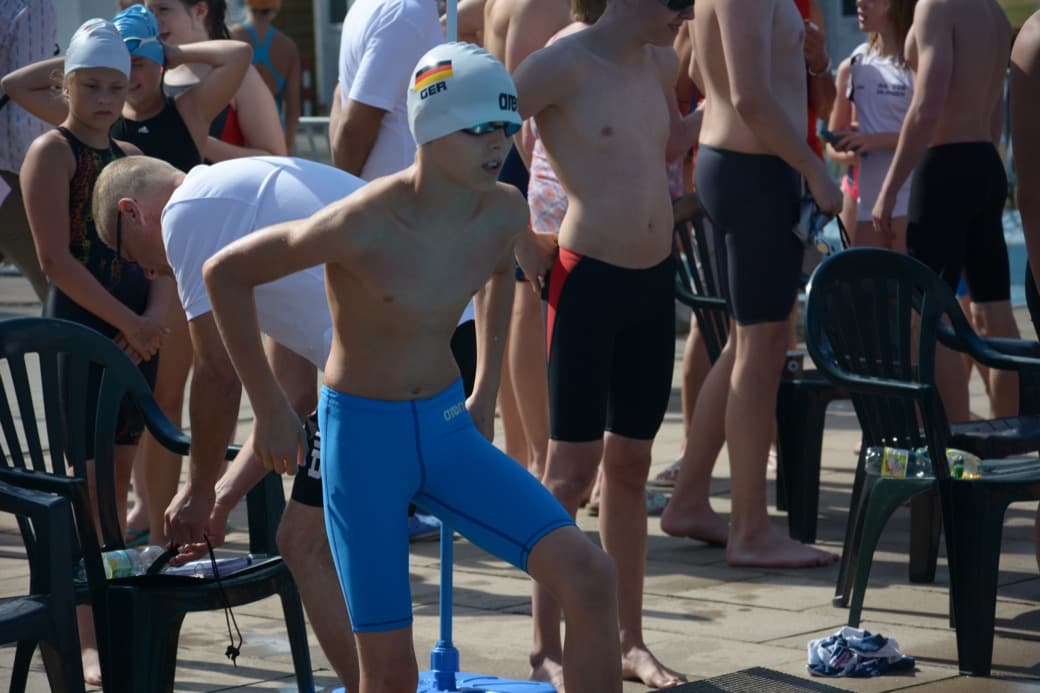
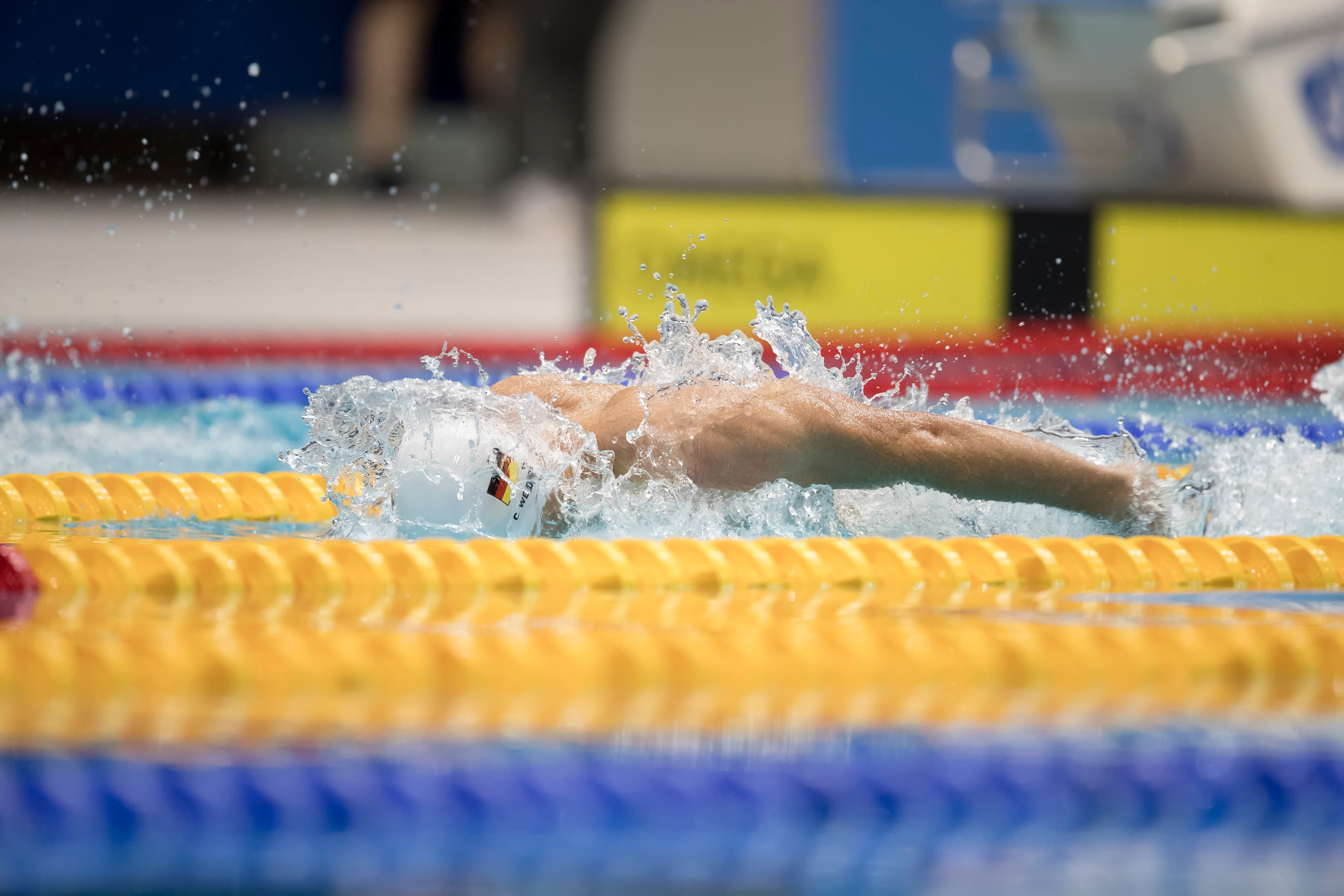
    A young swimmer in a white GER cap and blue jammers standing poolside among other competitors at an outdoor meet.
    01 — Beginning

    First club, first laps

    I was an active child who simply loved sports and staying in motion. My parents originally signed me up for basic swim lessons just so I could learn how to stay above water. I quickly fell in love with the feeling of moving through the water, and the club was structured so you could naturally progress group by group as you improved. That’s exactly what I did. I tried soccer and basketball as well, but as training demands grew, I had to choose. I chose swimming.
  2. 2019

    02 — Sticking with it

    Increasing volume

    Over the years, I worked with several coaches across two different clubs in two different cities, eventually moving from youth groups into the top squads in both. This meant training almost every day, putting in significantly more meters in the pool, and adding structured strength and conditioning work. It wasn't always smooth sailing. Dealing with changing coaches and internal club politics took a toll, and there were phases where I dreaded practice and lost some of the joy. At that point, I was ranked around 15th to 25th in Germany for my age group. When the club eventually split, I faced a crossroads: keep grinding the same high-volume way, or try a completely new approach with less meters, higher intensity, more strength, and sharper focus. I immediately knew the answer, and I fully committed to this new path.

  3. 2020

    03 — Improving

    First big achievements

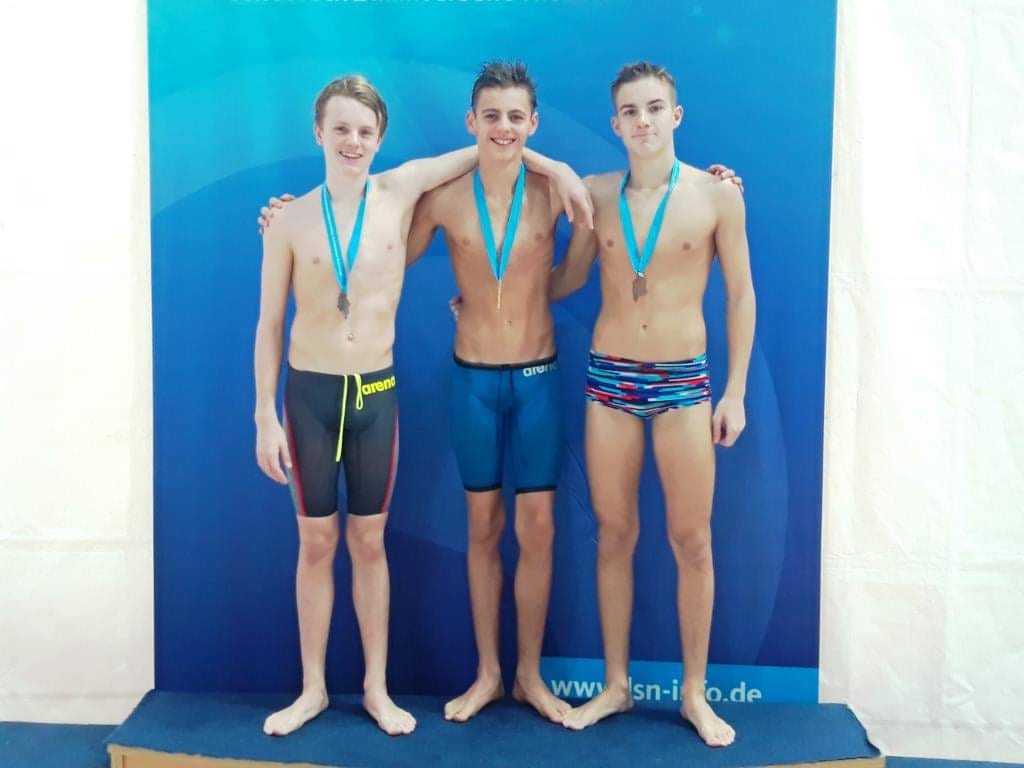
    After a year of following this new training philosophy—training continuously through COVID as part of the state squad—we had our first real test at the Junior National Championships. The strategy proved itself: I took 2nd and 3rd place. Training was fun again, and sharing that environment with close friends made all the difference.

  4. 2020/2021

    04 — Keep pushing

    Doubling down on what worked

    Riding the momentum of that success, we doubled down on the exact same strategy for the following season. The next year, I won my first Junior National title and qualified for my first Open National Championships, suddenly racing alongside the senior athletes. At 16 years old, I made the Open finals in both the 50m and 100m breaststroke, finishing 6th and 7th in the country.

  5. 2021/2022

    05 — Big steps

    Breaking a national age-group record

    At 17, I won my first Open National title in the U21 category. That performance earned me a spot on the German national team, along with funding from Deutsche Sporthilfe. Soon after, I broke the German national age-group record in the 50m breaststroke—becoming the fastest 17-year-old in German history in the event. Around the same time, most of my friends from my home club stopped swimming. I genuinely considered quitting too; without my training partners, it was hard to see why I should keep pushing. But right around that championship meet, the youth coach from the Olympic Training Center in Potsdam invited me to visit and see if Potsdam would be the right fit. After looking at a few Olympic training centers across Germany, I decided to make the move.

  6. 2022/2023

    06 — Training professionally

    Learning and competing at Junior Europeans

    For the first time, I was training in a world-class environment. Before this, I had spent years training in a short 4x25m pool. In Potsdam, I had access to top-tier coaching, dedicated physiotherapists, and elite facilities. My school was right next to the boarding house, just a five-minute walk from the pool. Everything was dialed in. Adapting wasn't easy. The jump in volume and session frequency was massive, but I adjusted well. As a junior squad, we broke the German national record at the DMSJ. Individually, I qualified for the Junior European Championships. Competing at the highest European junior level, I advanced through the 50m breaststroke semi-finals in 3rd, made the final in 2nd, and ultimately finished 4th—setting personal bests and missing the German junior record by just 0.01 seconds.

  7. 2023/2024

    07 — Top group

    The limits of hard work

    Following facility restructuring and the results from the prior year, I moved into the senior top group in Potsdam under a new coach. Once again, I had to adapt, as we pushed volume, intensity, and frequency even higher. From the start, my gut told me this might not suit my physiology, but my coach had an impressive track record, so I trusted his authority over my own instincts. That blind trust led straight into overtraining. My progress stalled, my times plateaued, and slight gains fell far short of what I had worked for. It was a tough period, but it taught me an invaluable lesson: no matter how accomplished a coach is, you always have to think critically and stay in tune with your own body.

  8. 2024/2025

    08 — Still working

    Resetting and rebuilding

    The following season brought mixed emotions. As a relay team, we broke the German record in the 4x100m breaststroke. Individually, I still edged out minor improvements, but my times were still not where I wanted or expected them to be.

  9. 2025/2026

    09 — Starting university

    Finding balance

    Starting university forced me to split my focus between demanding academics and high-performance sport. I reduced my training volume, hoping it would yield the same explosive turnaround I experienced years earlier when cutting meters. It didn’t work that way. I learned quickly that you can't optimize everything simultaneously without clear priorities. On top of that, I was still mentally and physically recovering from overtraining, and the general group sessions simply weren't tailored to what I needed as a pure sprinter. I seriously considered stepping away from competitive swimming altogether to focus on university, life, and my business projects. Even when I stepped away from group sessions to train completely solo at the Olympic center, I still managed to hit personal bests. It worked surprisingly well, but training alone without coaching input was far from sustainable.

  10. 2026/2027

    10 — Now

    Going all-in on the 50s

    A new opportunity opened up when my former coach from my first year in Potsdam formed a dedicated squad exclusively for 50m sprinters. The philosophy centers purely on maximum speed and power—a modern approach where quality and recovery take precedence over mindless volume. That is where I am today. Balancing rigorous university studies with elite sprint training isn't simple, and it demands tremendous discipline. But the passion and fun are completely back. Now, we let the racing do the talking.

In the press

Press